
Paint protection film in Jacksonville for nearly invisible defense against road debris, bug impact, light abrasion, and the daily wear aimed at vulnerable paint.
Florida roads do not care how carefully you chose the paint color. Highway debris, sand, insects, parking-lot contact, and loading wear all concentrate damage on a predictable set of areas. Paint protection film in Jacksonville places a clear sacrificial layer over those vulnerable surfaces so the film takes abuse that would otherwise reach the finish.
PPF is not an invisible force field and should not be sold that way. A severe rock can still cause damage. Poor paint underneath will still look poor. Edges and seams may be visible in certain light. What quality film can do is reduce many common chips, scuffs, and light scratches while preserving the original appearance more effectively than leaving the panel exposed.
Protect the panels that meet the road first
The front bumper, hood, front fenders, and mirrors receive the most obvious road impact. A partial-front package targets selected leading areas, while a full-front package creates more continuous protection across the complete nose. Rocker panels, lower doors, rear wheel-impact zones, door cups, door edges, luggage ledges, and trunk sills can be added based on how the vehicle is used.
A commuter spending hours on I-95 may benefit from a different coverage plan than a weekend vehicle. A family SUV may need loading-edge and door-cup protection. A performance car with wide rear quarters may need film where the tires throw debris. Coverage should follow exposure, not simply a package name.
Clear film should respect the paint
Good PPF is designed to preserve gloss and visual depth while remaining subtle. The finish of the film must also suit the vehicle. Gloss film is common on gloss paint; matte or satin film may be used to preserve or intentionally change the look of a matte surface when compatible options are available.
Panel coverage affects visibility. Wrapped edges can create a more seamless appearance when panel geometry and access allow. Pre-cut edges may be appropriate where disassembly would add unnecessary risk. Large panels and complex shapes may require seams. A precise quote explains what the planned coverage means on that specific vehicle.
Paint correction and condition come first
Clear film locks in what is below it visually. Swirls, chips, contamination, poor touch-up paint, failing clear coat, and repaint defects do not disappear under PPF. The surface is inspected, cleaned, and decontaminated before installation. Any correction or repair that should happen first needs to be completed and properly cured.
New cars can still arrive with defects, rail dust, dealer-installed products, or prior repairs. Older cars may be excellent candidates when the paint is sound, but weak repaint work can create removal risk later. Vehicle history matters, especially on bumpers and previously repaired panels.
How the installation works
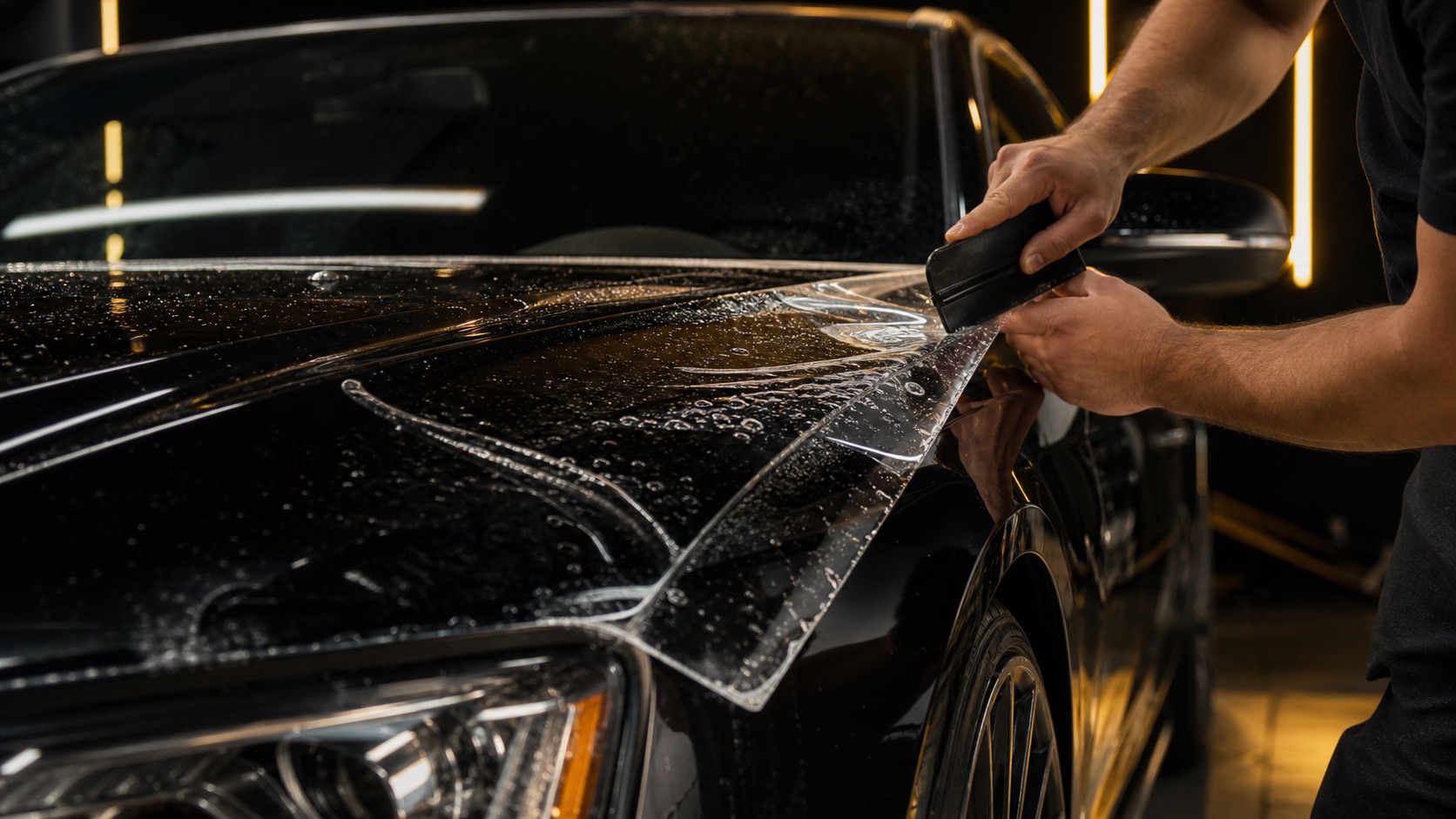
Film is positioned over a prepared panel using an installation solution that allows alignment before adhesion. The installer works the solution and air outward while controlling tension across curves and body lines. Edges are finished, panels are inspected, and the film begins its cure. Remaining light haze or moisture can be normal immediately after installation and should settle as the film dries.
PPF installation needs a controlled, clean environment more than ordinary mobile work. Dust, wind, temperature, lighting, and access all influence the result. The project location and conditions must support precision, especially for larger coverage.
Self-healing does not mean self-repairing
Many modern films are designed so light surface marks in the top layer soften with warmth. That can help the film maintain a cleaner appearance, but it does not heal punctures, torn edges, deep cuts, or damage that reaches the paint. The film remains a replaceable wear layer, and a heavily impacted section may need replacement even when it successfully protected the panel below.
Care after PPF installation
Follow the cure and washing timeline provided after installation. Avoid pressure washing directly into film edges, harsh chemicals, and abrasive tools. Remove insects, sap, fuel, and bird contamination promptly with film-safe methods. If wax, sealant, or coating is used, confirm it is compatible with the film and its finish.
Regular visual checks can catch a lifted edge or damaged section before contamination spreads. The objective is not to ignore the vehicle because it has PPF; it is to maintain a replaceable protective layer instead of repeatedly repairing paint.
Build the right coverage plan
Send the year, make, model, current paint condition, clear photos, and the areas you are most concerned about. Mention highway mileage, track use, garage conditions, and whether any panel has been repainted. From there, we can compare focused high-impact coverage with broader protection and explain the visible edges or seams involved.
Paint protection film FAQs
What areas can receive PPF?
Common choices include the front bumper, hood, fenders, mirrors, rockers, door edges, luggage ledges, and other impact zones. Full-body protection may also be considered.
Is paint protection film invisible?
It is designed to be visually subtle, but edges, seams, paint condition, lighting, and coverage pattern can affect how noticeable it is.
Can PPF stop every rock chip?
No. It is a sacrificial barrier that reduces many common impacts, but sufficiently sharp or severe debris can still penetrate the film.