Vehicle and fleet wraps in Jacksonville for color changes, accents, commercial visibility, and a professionally finished look without permanent paint modification.
Vinyl can change the character of a vehicle faster than paint and, when the underlying finish is suitable, with less permanence. The important word is suitable. A successful wrap depends on the condition of the paint, the complexity of the body, the film selected, the preparation, and the way edges, recesses, seams, and hardware are handled. Superb Job approaches vehicle wraps in Jacksonville as surface work first and a color or graphic project second.
That discipline applies to a personal color change, a roof or hood accent, and a commercial van carrying your business across the city. The design may be different, but the standard at the panel stays the same: clean adhesion, deliberate alignment, controlled stretch, and an installation planned around how the vehicle is actually used.
Color-change wraps for a different presence
A full or partial color change can create a finish that is difficult or expensive to achieve with conventional paint. Satin, gloss, matte, metallic, and textured films each interact with a vehicle's body lines differently. A dramatic sample chip may look more restrained across a large SUV, while a subtle neutral can become striking once light moves across the full body.
Film choice should consider more than color. Daily outdoor exposure, washing habits, horizontal panels, complex curves, and expected ownership all affect the decision. Some finishes show contamination or scuffs more readily than others. A useful consultation covers appearance, care, and limitations before a roll is ordered.
Accents without committing the whole car
Not every vehicle needs a full wrap. Roofs, hoods, mirror caps, trim, stripes, and selected panels can create contrast with less material and downtime. Accent work also gives owners a way to test a finish or sharpen a factory design without changing every painted surface.
Edges and transitions are especially visible on partial wraps. The stopping point should feel intentional, follow a natural body line, and avoid unnecessary seams in high-visibility areas. A lower price does not justify a random finish line.
Commercial and fleet wraps that work beyond the parking lot
A wrapped service vehicle can identify the company wherever the work goes. Commercial wrap design needs a different discipline than a social post or business card. The company name, primary service, and contact path must read quickly from a moving or parked vehicle. Oversized service lists, tiny QR codes, and busy background graphics often make a wrap less useful rather than more impressive.
For one van or a growing fleet, consistency matters. Vehicle templates, approved colors, logo files, panel maps, and installation notes help keep the next unit aligned with the first. Full printed wraps can deliver maximum visual coverage; partial wraps and high-quality lettering can create a strong commercial identity with less film. The right scope depends on the vehicle, routes, budget, and brand.
Paint condition determines what is possible
Wrap film does not repair paint. Chips, peeling clear coat, rust, deep scratches, body filler, and weak repaint work can remain visible or create adhesion and removal problems. Sound factory paint is generally the best foundation. Repaired or repainted panels need to be fully cured and evaluated before installation.
Vehicles also need to arrive clean and free from waxes, dressings, ceramic contamination, and heavy road film. The installer will still complete detailed surface preparation, but a wrap bay should not begin with mud, oily tire product, or fresh wax migrating to panel edges.
Installation is controlled tension, not simply stretching
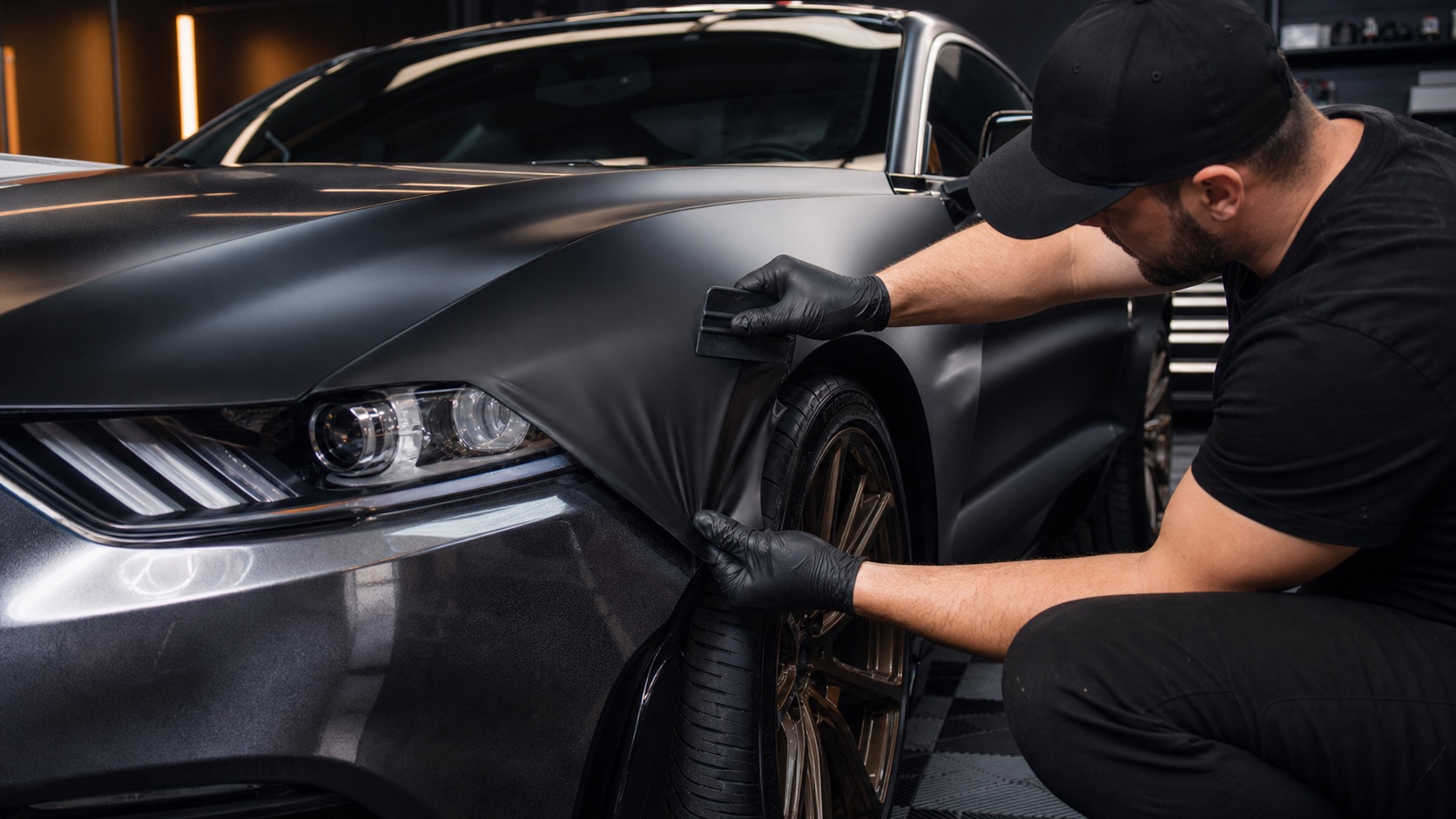
Modern wrap films are conformable, but excessive stretch changes color, adhesive performance, and durability. Deep recesses, compound curves, bumpers, and tight corners require a plan. Some components may need removal for a cleaner finish; others are safer to work around. Those choices balance finish quality, vehicle risk, and serviceability.
Seams are sometimes necessary on large or complex areas. When used, they should be positioned and overlapped with weather, washing, and sightlines in mind. Post-heating and final edge inspection help stabilize the work after the film is placed.
Care for the finish you invested in
Hand washing with mild, film-safe soap is usually the best routine. Avoid harsh solvents, stiff brushes, and aggressive automated washes that can catch edges. Bird droppings, fuel, sap, and other contamination should be removed promptly according to the film manufacturer's guidance. Outdoor storage, Jacksonville heat, horizontal exposure, and color all affect service life, so no wrap should be sold as maintenance-free.
For a quote, send clear photos of every side of the vehicle, the year, make, model, current paint condition, desired finish, and whether graphics or printed artwork are involved. Commercial clients should also send vector logo files and a short list of the information that truly needs to appear.
Vehicle wrap FAQs
Does a wrap damage factory paint?
Quality film on sound factory paint is designed to be removable. Existing damage, weak repaint work, rust, or peeling clear coat can change that risk and must be evaluated first.
Can Superb Job wrap a business vehicle?
Yes. Commercial vehicles can use brand colors, lettering, graphics, partial coverage, or a full printed wrap after the design and vehicle are reviewed.
How should I wash a wrapped vehicle?
Gentle hand washing is generally preferred. Use mild vehicle-safe products, avoid harsh chemicals and aggressive brushes, and follow the care guide for the installed film.