
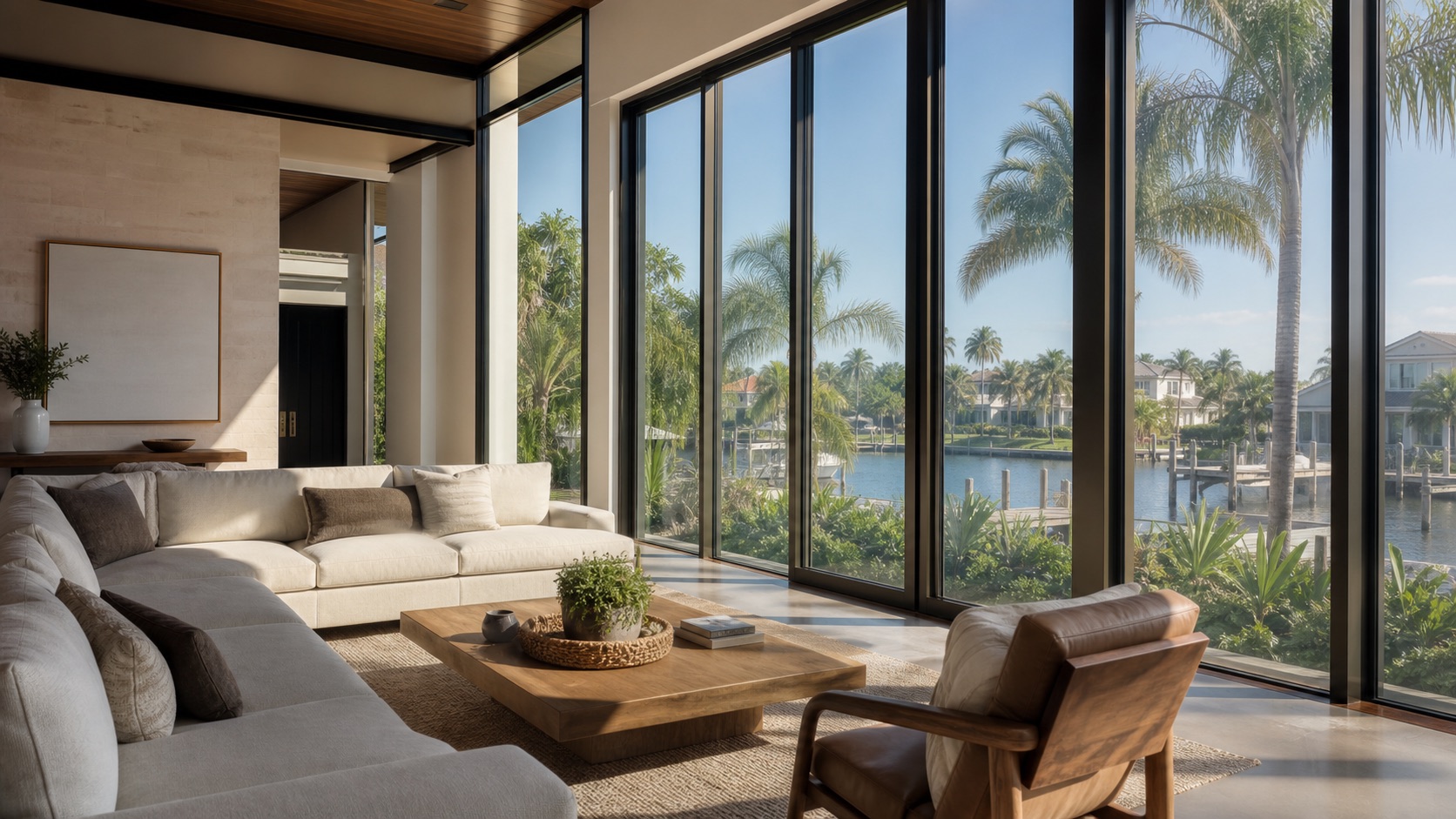
Residential window film in Jacksonville that helps manage Florida heat, glare, fading, and daytime privacy while keeping the natural light and view you value.
Large windows make a home feel open until the afternoon sun turns one room uncomfortable, washes out the television, or forces the shades closed. Replacing good glass is an expensive way to solve a problem that often begins at the surface. Professionally selected residential window film in Jacksonville can improve the way existing windows handle solar energy and privacy without rebuilding the opening.
The right film should respond to the room, glass, direction, and view. A south- or west-facing living area may need stronger solar control. A front door or bathroom may call for decorative privacy. A room with a water or garden view may need a nearly clear option that protects comfort without looking heavily tinted. Those are different jobs, even when every piece of film arrives on a roll.
Reduce heat without living behind closed blinds
Jacksonville sunlight can create hot zones near glass, especially where wide doors and tall windows receive direct exposure. Solar-control film helps reduce the energy entering through the glass, which can make seating areas more usable and ease the demand placed on cooling equipment. Results depend on the film, glass, shade, and room conditions, so the recommendation should be based on the opening rather than a universal promise.
Film is also useful when a room has too much glare but the homeowner does not want to lose daylight. A moderate, neutral-looking film can soften the harshness while maintaining a comfortable connection to the outdoors. That balance is often more valuable than simply choosing the darkest product available.
Protect the interiors you chose carefully
Ultraviolet exposure contributes to fading in flooring, upholstery, artwork, cabinetry, and other interior materials. Window film can block a high portion of UV energy depending on the product, while also addressing solar heat. It is important to be honest: film does not make fading impossible. Visible light, heat, material dyes, and time also play a part. It does, however, give you another layer of defense for rooms that receive heavy sun.
For display shelves, wood floors, rugs, or furniture near large panes, the difference can be meaningful. A nearly clear film may be appropriate when color neutrality and daylight are priorities. More reflective or darker options can be considered where heat and privacy matter more.
Privacy that matches the space
Privacy is not one product. Reflective film can increase daytime privacy while preserving outward views, but it depends on the exterior being brighter than the interior. When the lights come on after dark, that relationship changes. Frosted and decorative films obscure the view more consistently and are often better for bathrooms, sidelights, entry doors, offices, or any glass where privacy is needed around the clock.
Before recommending a privacy film, we consider what must be hidden, what light should remain, and whether the view still matters. A subtle frosted band can solve a sightline issue without covering an entire window. A full panel can create a clean architectural look. The best solution is usually more specific than “make it private.”
Compatible film starts with the glass
Not every film belongs on every pane. Glass type, size, age, coatings, and whether the unit is single- or double-pane influence what is appropriate. Excessive thermal stress can be a concern when a film and glass system are poorly matched. Existing damage, failing seals, or rough edges should also be identified before installation.
That review is one reason a real project assessment matters. Film should improve the window, not create a new problem. Once the product is selected, careful glass cleaning and edge work help the finished installation look intentional rather than added on.
What to expect after installation
Fresh film can show a light haze or small moisture pockets while application solution dries. Cure time changes with season, sun exposure, film, and glass. Do not pick at edges or aggressively clean the film during that period. Once cured, use a soft cloth and an ammonia-free cleaner. Abrasive tools and blades can scratch the surface.
For a useful quote, send photos of the windows from inside and outside, rough measurements, the room type, and the main problem you want to solve. Note whether the glass is unusually hot, double-pane, textured, or already coated. Those details help narrow the recommendation before a site visit.
Residential window film FAQs
Will residential film make my home dark?
It does not have to. Film ranges from nearly clear solar-control products to darker and more reflective options. We can prioritize daylight and the view when that matters most.
Can film help protect furniture and floors from fading?
It can reduce UV and solar heat, both major contributors to fading. It cannot stop all fading because visible light, material chemistry, and age still matter.
Does reflective daytime privacy work at night?
Not reliably. Once the inside is brighter than outside, the effect can reverse. Use coverings or consider frosted film when privacy is needed both day and night.