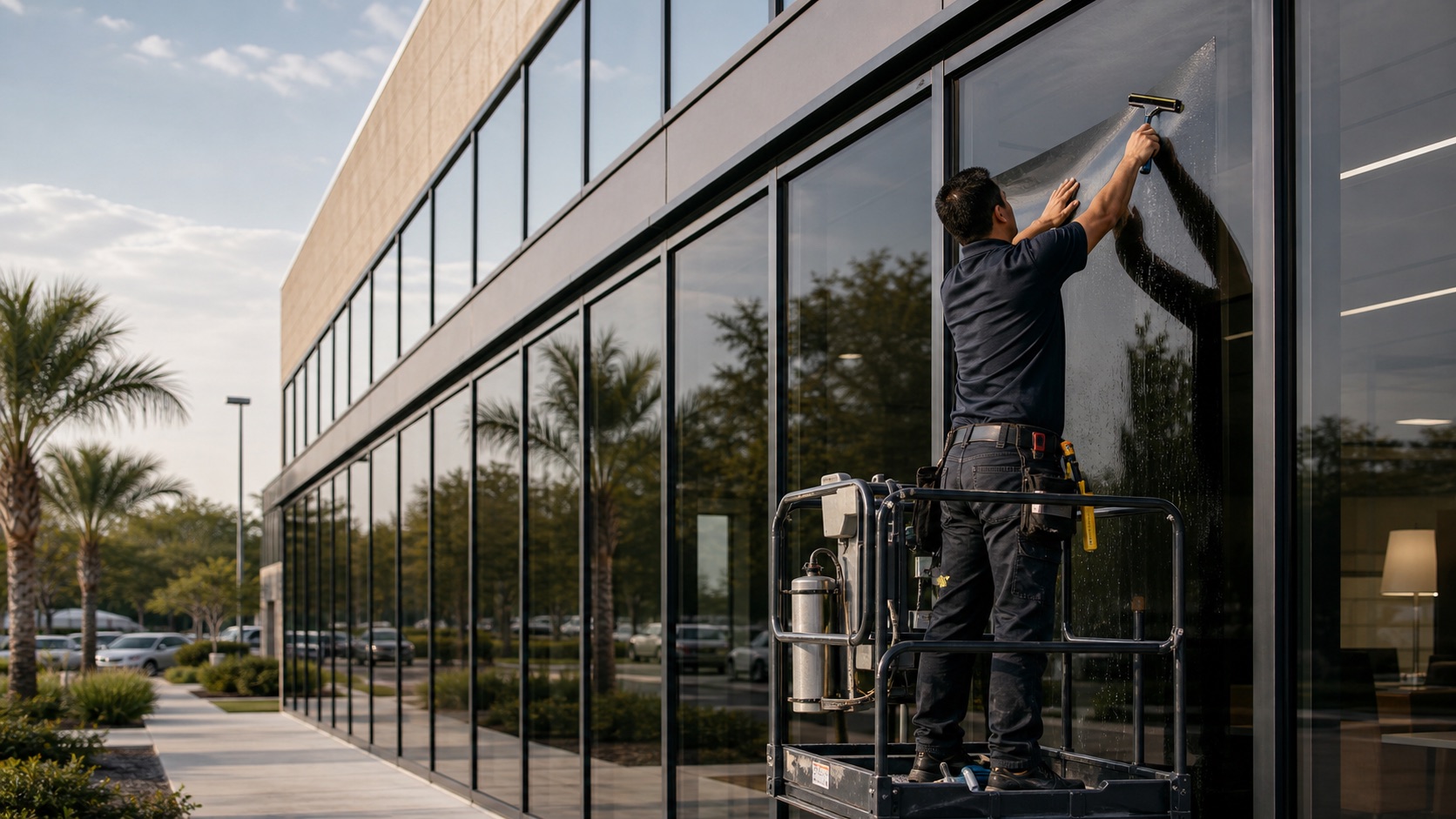
Commercial window film in Jacksonville for offices, storefronts, and facilities that need better comfort, glare control, privacy, appearance, or glass performance.
Commercial glass can be one of a building's best features and one of its biggest daily frustrations. It brings in daylight and visibility, but it can also create afternoon heat, screen glare, exposed work areas, uneven temperatures, and a storefront appearance that does not match the brand inside. Commercial window film in Jacksonville offers a targeted way to change the performance of existing glass without a full window replacement project.
Superb Job works with business owners, managers, tenants, and property teams to identify what the glass needs to do differently. The best film for a street-facing retail window may not belong in a conference room. Exterior solar load, interior privacy, safety goals, landlord requirements, and after-hours appearance all influence the specification.
Improve comfort where sunlight lands hardest
Large commercial panes can create hot perimeter zones that employees and customers simply avoid. Strong sunlight can also make thermostats fight a problem that is concentrated at the glass. Solar-control film can reduce heat and glare while maintaining useful daylight and outward visibility. The degree of visible change depends on the film selected, so a neutral, understated appearance is possible when mirrored glass is not appropriate.
For offices, reducing screen glare can make workstations more practical without permanently closing blinds. In retail and hospitality settings, controlled sunlight can make seating and display areas more comfortable. Film performance should be discussed alongside glass type, orientation, shading, and HVAC conditions rather than treated as a guaranteed percentage reduction for every building.
Create privacy without building a wall
Interior glass helps spaces feel connected, but conference rooms, treatment rooms, office doors, and employee areas often need visual separation. Frosted and decorative films can obscure views while allowing light to travel through the space. Full coverage creates consistent privacy; bands, gradients, patterns, and cut designs can preserve openness at eye level or support a more branded interior.
Exterior privacy has different rules. Reflective solar film can improve privacy when the outside is brighter, but the effect may reverse at night when interior lighting dominates. If around-the-clock privacy is essential, the film and any supplemental coverings should be planned together.
Give the building a more deliberate face
Film can help a mix of old or inconsistent glass read as one clean facade. It can also soften views of storage, equipment, or back-of-house activity from a public walkway. Decorative film can turn plain partitions into an intentional design feature without permanently etching the glass.
For tenants, removability can be an advantage compared with more permanent construction. The exact removability and restoration requirements depend on the product, installation, lease, and age of the glass, so those conditions should be clear before a commercial project begins.
Plan around the property, not just the pane
A commercial quote should include glass dimensions, access, floor level, work-hour limitations, existing coatings or film, and any property-management requirements. Interior furniture, product displays, security systems, and customer traffic may affect how installation is staged. Larger projects can be divided into practical phases so the highest-priority zones are addressed first.
Film-to-glass compatibility remains essential. Insulated units, laminated glass, tinted glass, coatings, large panes, and damaged seals can change what products are appropriate. A responsible recommendation begins with understanding the glass system and the manufacturer's application guidance.
Common commercial film applications
- Offices: reduce glare and hot spots, add meeting-room privacy, and give interior glass a finished appearance.
- Retail storefronts: manage solar exposure, improve customer comfort, and control views into selected zones.
- Restaurants and hospitality: make perimeter seating more comfortable without sacrificing daylight.
- Health and professional spaces: use frosted film for visual privacy while maintaining bright interiors.
- Facilities and service businesses: unify exterior glass and reduce exposure of work or storage areas.
Care and maintenance
New commercial film needs time to cure. Light haze or moisture can be visible during that period. Cleaning teams should receive the correct care instructions: soft tools, non-abrasive cloths, and film-safe cleaner. Blades and harsh scrubbers can permanently damage the surface. Where the glass is part of an active storefront or facility, assigning that guidance to the cleaning vendor prevents an avoidable problem later.
To start a commercial quote, send the property address, photos of the glass, rough pane dimensions or plans, the desired outcome, and any access or scheduling constraints. That information lets us separate a simple privacy project from a larger performance-film scope and plan the next step efficiently.
Commercial window film FAQs
Can commercial film reduce glare on computer screens?
Yes. A carefully selected solar-control film can reduce glare and improve workstation comfort while keeping useful daylight. Shade and reflectivity should fit the space.
Can film add privacy to office glass?
Yes. Frosted, decorative, patterned, and solar-control films solve different privacy needs. We choose based on whether the glass is interior or exterior and whether privacy is needed after dark.
Will installation disrupt business hours?
That depends on access and project size. Smaller areas may require little disruption, while larger work can be phased around customers, employees, and building rules.